Beyond Diagnosis: Author Liz Albuquerque Explores Motherhood, Autism and Inclusion in Growing Up With Ally
 brandmakerrd@gmail.com
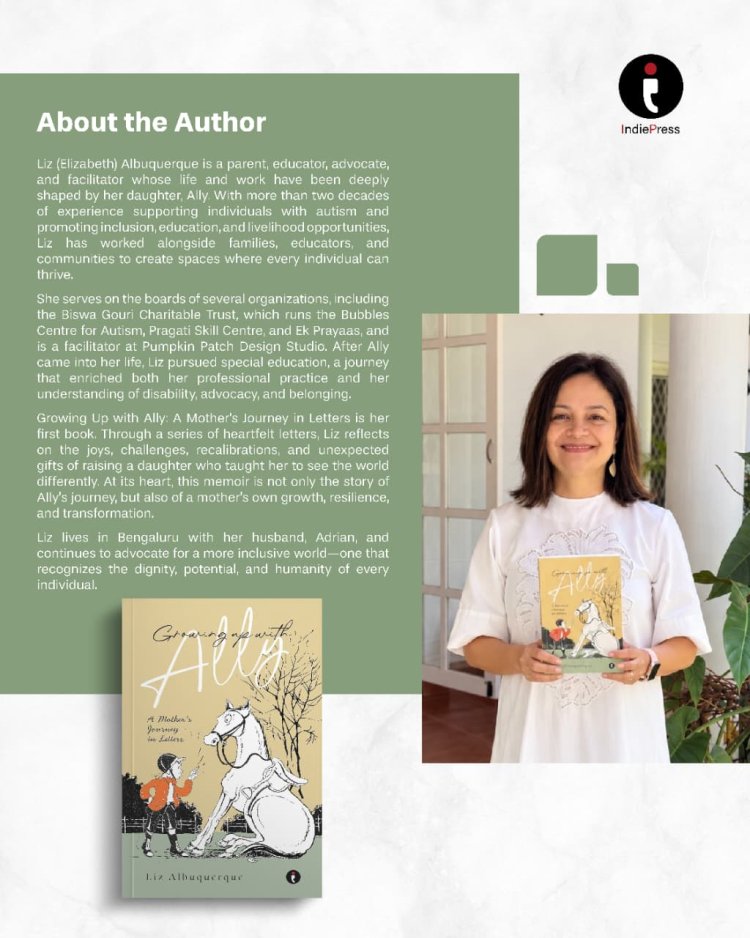
Beyond Diagnosis: A Mother’s Journey of Love, Inclusion and Letting Go
What does it mean to truly see a child—not through the lens of a diagnosis or the weight of expectations, but as an individual with a distinct personality, aspirations, choices and potential?
In Growing Up With Ally: A Mother’s Journey in Letters, author Liz Albuquerque explores this question through an intimate collection of letters to her daughter, Ally. What begins as a mother's reflections on childhood, love, fear, hope and motherhood gradually becomes a story of mutual growth, revealing how a daughter can reshape a parent's understanding of independence, disability, education and what it means to live a fulfilling life.
Ally is on the autism spectrum, but as Albuquerque makes clear, this is only one part of her story. Today, Ally runs her own design studio, Pumpkin Patch, and manages professional responsibilities with the support of her team. Her journey challenges conventional assumptions about autism, adulthood, employment and independence.
Drawing on more than two decades of experience in special education, autism, inclusion and livelihood, Albuquerque brings both personal insight and professional understanding to the conversation. Yet she does not position herself as an expert offering definitive answers. Instead, she writes as a mother who has had to learn, unlearn and reconsider what she once believed about raising a child.
At its heart, the memoir is about learning when to hold on and when to let go. It invites readers to look beyond diagnosis, listen more carefully and recognise that every individual deserves dignity, choice, meaningful relationships and a sense of belonging.
In a world still learning what genuine inclusion looks like, Growing Up With Ally offers a timely reminder that acceptance begins when we allow people to be seen for who they are.
1. Can you provide an overview of your book and how it addresses key challenges in the world today?
Growing Up With Ally: A Mother’s Journey in Letters is a memoir told through a collection of letters from a mother to her daughter. But as I wrote them, I realised they were also letters to myself—reflections on motherhood, love, fear, hope, expectations, letting go and learning to see the world through my daughter's eyes.
Ally's journey has taught me that we often spend too much time looking at what a person cannot do, rather than discovering who they are and what they can become. Her life has made me question many of my own assumptions about disability, independence, education and what a fulfilling life looks like.
I hope the book contributes, in a small way, to a more inclusive world—one where we see the person before the diagnosis, where difference is not something to be feared, and where every individual has opportunities for choice, relationships, dignity and belonging.
We continue to encounter assumptions about what people with disabilities can achieve and what their futures should look like. I hope my story encourages readers to question those assumptions and recognise that every person's journey is different.
2. What inspired you to write this book, and what experiences do you bring to the subject?
Ally inspired me to write it.
There were so many things I wanted to tell her: memories from when she was little, things I had learnt along the way, moments of joy, moments of fear, mistakes I had made and the many ways in which she had changed me.
My professional journey grew out of my personal one. Becoming Ally's mother led me into special education, and over the past two decades I have had the privilege of working in autism, inclusion, education and livelihood. I have learnt from many children, young people and families along the way.
But I don't write this book as an expert giving advice. I write as a mother who has lived this journey. I have had to learn, unlearn and constantly recalibrate my understanding of what Ally needed and what I needed to let go of.
Perhaps the biggest thing I have learnt is that while we think we are raising our children, they are also quietly raising us.
3. What valuable insights or takeaways can readers expect from your book?
I hope readers take away the understanding that there is no single way to grow up and no single way to live a meaningful life.
One of the most important lessons for me has been learning to separate my dreams for Ally from her dreams for herself. As parents, we naturally have hopes and expectations for our children. But at some point, we must step back, listen and allow them to become who they are.
I also hope parents take away a sense of hope. A diagnosis, a difficulty or a different beginning does not determine how an entire life will unfold.
Another important lesson is that independence does not always mean doing everything on your own. Sometimes, independence means having a choice, being heard, making a decision and having the right support to act on it.
Most of all, I hope readers see that this is not only the story of Ally growing up, but also of me growing into myself because of her.
4. Can you share real-world examples from the book that illustrate its central themes?
The book is not a collection of case studies. It is much more intimate than that. The examples come from our everyday lives.
Some of the most meaningful moments have been ordinary ones: Ally learning to communicate, making choices, developing friendships, going out into the community, discovering what she enjoys and gradually taking greater ownership of her life.
As parents, particularly during the early years, we can become very focused on milestones. Over time, I learnt that some of the most important milestones are not necessarily the ones that appear on a developmental chart.
They might involve making your own choice, paying for something yourself, going somewhere independently, building a friendship, finding something you love doing or becoming confident enough to express what you want.
Ally runs her own design studio, Pumpkin Patch. She has also taken on professional and financial responsibilities, including paying professional tax, filing income tax returns and paying salaries, with the support of her team.
Her life is a reminder of what can unfold when we give a person the opportunity, support and space to become themselves.
5. What challenges did you encounter while writing the book, and how did you overcome them?
The biggest challenge was being honest while remembering that this was not only my story. It was Ally's story too—her life, her experiences and her journey.
Writing about your child inevitably means writing about yourself, including your fears, hopes, mistakes and expectations. There were memories that were difficult to revisit, and there were times when I wondered whether I should include something at all.
I had to remain conscious of Ally's privacy, her dignity and her right to her own story. I constantly asked myself: Is this my story to tell? How would Ally feel about this being shared?
I never wanted my voice as a mother to overshadow Ally's own personhood. That became an important part of the writing process: telling our story while honouring the fact that Ally has her own voice, choices and identity.
I also chose not to make the book a strictly chronological account. Our lives do not happen in neat chapters, and memories do not always arrive in order. The letters move between the past and the present because that is how my relationship with Ally exists in my mind.
Eventually, I stopped trying to make everything perfect and allowed myself to tell the truth of our journey while respecting the person at its centre.
6. What do you hope readers will gain from your book, and how could it make a positive impact?
More than anything, I hope readers feel less alone.
If a parent has just received a diagnosis for their child, I hope they can see beyond the fear and uncertainty of that moment and believe that there can still be enormous joy, possibility and growth ahead.
If a parent is further along the journey, I hope they recognise parts of their own story in mine.
For readers who do not have a personal connection with disability, I hope the book offers a glimpse into a world they may not otherwise know and encourages them to approach difference with greater understanding.
I would love for someone to finish the book and think, perhaps I need to listen a little more. Perhaps I need to expect a little less. Perhaps I need to give this person more space to show me who they are.
If the book creates even a little more empathy, acceptance and openness, I will feel that it has done something worthwhile.
7. In a rapidly changing world, how does your book remain relevant over time?
The world around us will continue to change. Our understanding of autism, disability, education and inclusion will evolve. Technology will change, and the language we use will change.
But the questions at the heart of my book are timeless.
How do we see our children? Do we really listen to them? How much of their lives are we trying to shape for them? What does independence actually mean? And can we allow our children to become themselves, even when that looks different from what we imagined?
Growing Up With Ally is not a handbook or a formula for parenting. It is a story about a mother and daughter and the relationship that has shaped them both.
Beneath the questions of disability and inclusion lies something universal: the extraordinary, sometimes messy and beautiful experience of loving a child and learning when to hold on—and when to let go.
I hope the book continues to encourage readers to question assumptions, recognise individual potential and understand that inclusion is not simply about making space for someone. It is about ensuring that they are valued, heard and able to participate in life in ways that are meaningful to them.
A Story That Invites Us to See Differently
What happens when a mother learns that raising a child is not about shaping them into the person she imagined, but about making room for the person they are becoming?
In Growing Up With Ally: A Mother’s Journey in Letters, Liz Albuquerque offers a moving reflection on motherhood, autism, independence and inclusion. Her story encourages parents to listen more closely, communities to challenge their assumptions and readers to recognise the dignity and potential of every individual.
Whether you are a parent, educator, disability advocate or someone seeking a more personal understanding of neurodiversity, this memoir offers an invitation to look beyond labels and discover the human stories within them.
Buy Growing Up With Ally: A Mother’s Journey in Letters by Liz Albuquerque on Amazon today. Discover a heartfelt story of love, dignity, acceptance and the courage to let children become themselves.