EngageX 2026 Highlights: How AI, Autonomous Agents, and Trust Are Shaping the Next Generation of Customer Engagement
 Entrepreneur Hunt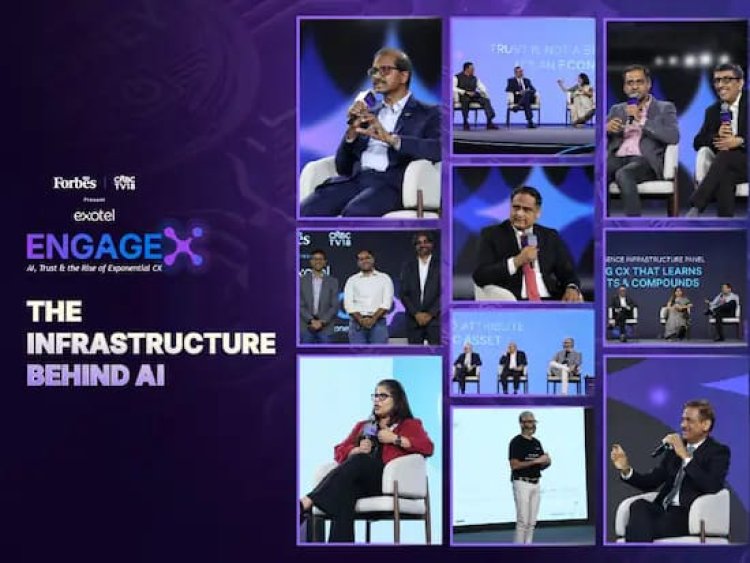
Artificial Intelligence (AI) has rapidly evolved from an emerging technology into a key driver of modern business transformation. Across industries, organizations are using AI-powered tools such as predictive analytics, intelligent virtual assistants, and autonomous agents to create faster, smarter, and more personalized customer experiences. However, as businesses increasingly rely on automation, one challenge remains at the heart of customer engagement—building and maintaining trust.
This critical topic was the focus of EngageX 2026, presented by Forbes India and CNBC-TV18. The event brought together industry leaders from banking, insurance, aviation, retail, logistics, technology, and digital-first businesses to discuss how AI is redefining customer experience (CX). While the discussions highlighted remarkable technological advancements, one message stood out consistently: AI can transform customer engagement, but trust remains the foundation of every successful customer relationship.
Customer Experience Has Become a Business Strategy
Customer experience is no longer limited to customer support or resolving complaints. Today, every interaction between a business and its customers influences brand perception, loyalty, retention, and long-term growth.
Industry experts at EngageX 2026 emphasized that organizations are shifting from reactive customer service to delivering seamless and personalized experiences throughout the entire customer journey. Whether customers are opening a bank account, booking travel, purchasing insurance, or shopping online, they expect quick, convenient, and frictionless interactions. Meeting these expectations requires businesses to combine advanced technology with a deep understanding of customer behavior.
Trust Is the Real Competitive Advantage
One of the event's most impactful discussions revolved around the idea that "Trust is Not a Brand Attribute, It's an Economic Asset." Customers share sensitive personal and financial information with businesses every day, making trust more valuable than ever before. Regardless of how advanced AI becomes, organizations that fail to protect customer trust risk losing long-term loyalty.
Several industry leaders shared their perspectives on what it takes to build trust in the digital age.
Shivakumar Ganesan, Co-founder and CEO of Exotel, explained that technology should strengthen human relationships rather than replace them. According to him, AI should improve efficiency while preserving empathy and meaningful customer interactions.
Tarun Chugh, Managing Director and CEO of Bajaj Life, compared trust to a financial ledger where every positive interaction adds value and every broken promise reduces it. Businesses earn trust through consistent actions rather than marketing campaigns alone.
Dhiraj Relli of HDFC Securities highlighted the importance of reliability. Customers expect uninterrupted digital services, and even minor disruptions can negatively impact confidence in a brand.
Similarly, Alok Aggarwal of Muthoot Homefin summarized trust-building in three simple words—Commit. Deliver. Repeat. Organizations that consistently fulfill their promises build stronger customer relationships over time.
AI Is Shifting Customer Engagement from Reactive to Predictive
One of the biggest themes at EngageX 2026 was the evolution of customer service from reactive problem-solving to predictive engagement.
Traditionally, businesses responded after customers reported an issue. Today, AI enables organizations to anticipate customer needs before problems arise. By analyzing customer behavior and identifying patterns, predictive intelligence helps businesses offer personalized recommendations, timely reminders, and proactive support.
This shift not only improves customer satisfaction but also creates smoother and more efficient experiences that strengthen long-term relationships.
Personalization Is Becoming the New Standard
Consumers increasingly expect businesses to understand their preferences and deliver experiences tailored to their individual needs. Generic communication is becoming less effective in a highly competitive marketplace.
Marina Datta of Birla Opus highlighted how businesses are using customer data responsibly to create hyper-personalized experiences. By analyzing purchase history, browsing behavior, and previous interactions, organizations can deliver more relevant product recommendations, customer support, and marketing communications.
Personalization is no longer viewed as an added benefit—it has become an essential part of delivering exceptional customer experiences.
Understanding India's Diverse Customer Base
India's cultural and linguistic diversity presents unique challenges and opportunities for businesses. Vijaybahu Joshi of Reliance Jio emphasized that AI systems must move beyond standardized solutions to understand regional preferences, languages, festivals, and buying behaviors.
Organizations that adapt their customer experiences to local contexts are more likely to build stronger relationships across diverse markets. Intelligent systems that recognize these differences can create more meaningful and inclusive customer interactions.
Customers Expect Businesses to Stay One Step Ahead
Another important insight came from Swiggy's Rohan Chhazed, who noted that customers increasingly expect businesses to anticipate their needs without being asked.
Consumers are already familiar with AI-powered recommendations from streaming platforms, e-commerce websites, banking applications, and food delivery services. As these experiences become more common, customers expect similar levels of intelligence and convenience from every brand they interact with.
Businesses capable of predicting customer needs before they arise are likely to gain higher satisfaction, loyalty, and repeat business.
Measuring Customer Experience Beyond Satisfaction
Experts also discussed how businesses should evaluate customer experience more effectively. Traditional satisfaction surveys alone are no longer sufficient.
Customer retention emerged as one of the strongest indicators of successful CX. Retaining loyal customers is significantly more valuable than constantly acquiring new ones.
Divesh Sawhney of Zepto explained that repeat purchases demonstrate genuine customer trust and long-term loyalty. Similarly, Sachin Bhatia of Exotel highlighted the importance of reducing customer effort. Simple processes, quick responses, and easy problem resolution create better experiences and encourage customers to stay with a brand.
These metrics provide a more accurate picture of customer satisfaction than short-term sales alone.
Conclusion
EngageX 2026 showcased how Artificial Intelligence is transforming customer engagement through predictive intelligence, autonomous agents, and personalized experiences. Businesses now have access to technologies that can deliver faster, smarter, and more efficient customer interactions than ever before.
However, the event reinforced that technology alone cannot guarantee customer loyalty. Trust, transparency, consistency, reliability, and human-centered decision-making remain the true foundations of lasting customer relationships.
As AI continues to reshape industries, the organizations that combine intelligent automation with genuine trust-building practices will be best positioned for long-term success. The future of customer experience will undoubtedly be powered by AI—but it will always be built on trust.
For more information read the full feature here : https://www.forbesindia.com/article/upfront/brand-connect/engagex-2026-spotlighting-customer-experience-in-the-era-of-ai/2995186/1