When AI Meets Hiring: Building with Care in a High-Stakes Domain .
 publisher@engame.in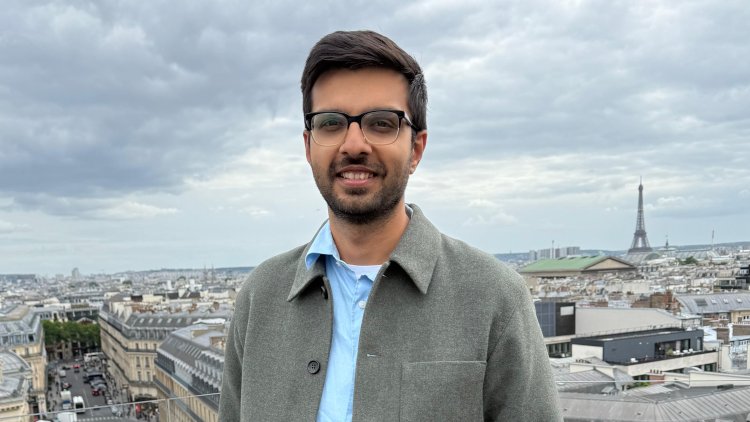
By Manish Kumar, Special Correspondent
As artificial intelligence (AI) makes its way into nearly every corner of the workplace, few areas are as sensitive, or as consequential, as hiring. The promise is tempting - AI tools that can parse thousands of resumes in seconds, identify ideal candidates, and streamline the entire recruitment process. But with that efficiency comes a question many in the field are still grappling with: What happens when machines start making decisions about people?
In hiring, small algorithmic choices can shape real human outcomes—who gets interviewed, who gets overlooked, who feels seen, and who gets filtered out. Biases can scale. Context can be lost. And opacity, if left unchecked, can erode trust on both sides of the recruitment process.
That’s why a growing number of technologists are arguing for a slower, more careful approach. One of them is Arjun Singh, a Seattle-based machine learning practitioner at Amazon, who has been working on an AI-powered recruiting assistant, not to replace human recruiters, but to support them with transparency, safety, and nuance. The tool has already won him a Stevie Asia-Pacific Award and two Globee Awards for innovation. But Singh is more focused on usability, ethical safeguards, and long-term impact.
“The goal isn’t speed” Singh says. “It’s understanding—making sure candidates are understood and recruiters know why a decision was made. And most importantly, making sure those decisions are fair.” It's a telling sentence, and one that recurs often in Singh's speech: not systems, not models-people.
Designing for Context, Not Just Output
Singh’s assistant uses a combination of large language models and retrieval-augmented generation (RAG) to evaluate candidate resumes, match them to job descriptions, and even assess cultural fit to the company. The tool then comes up with a decision on whether to interview the candidate or not. But what makes the tool notable isn’t just its technical architecture—it’s the layers of caution built into it.
The assistant anonymizes data to minimize bias. It explains its reasoning in plain language, not black-box scores. And it flags uncertainty rather than hiding it. Singh has also integratedmodules that penalize the model if it “hallucinates” or misrepresents information from the job description, resume, or company values—a self-correcting mechanism to protect both hiring teams and candidates. These are not glamorous features. They are hard, slow, and profoundly necessary.
“We’re not just ranking documents,” he says. “We’re making inferences about people’s potential, and that deserves a higher bar.”
The timing is uncanny. As generative AI floods industries and headlines, Singh's work lands with unusual restraint. He does not talk about replacing recruiters, instead, he talks about AI sharing the cognitive load, and human-in-the-loop decision-making. His AI assistant does not replace HR-it supports them.
From Mumbai to the Cloud
Singh's story begins in 2011, where he graduated from the University of Mumbai with a degree in Information Technology. His career began in the unlikely domain of ERP security atAccenture, and later, Risk Assurance at PwC in New York. For a decade, he walked the tightrope between compliance and innovation, often working in the shadows of larger systems. But it was only in 2019, after joining Amazon, that he began to feel the gravitational pull of AI.
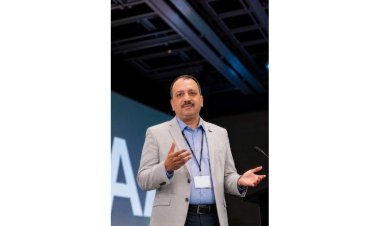
Being a visual person, Singh went deep into learning image generation AI models in 2024, eventually presenting his work at tech conferences, and getting published on Amazon’s official machine learning blog, accessible globally to millions of industry professionals. Despite not coming from an IIT or an Ivy League background, Singh has steadily shaped conversations in AI-through awards, talks and a quiet commitment to advancing the field forward.
Towards Thoughtful Innovation
In the end, Singh may not be the loudest voice in the AI revolution. But he is one of its more thoughtful ones. His work doesn't scream disruption. It whispers design. He is building tools that think-but more importantly, understand. In a time of hype and velocity, he reminds us that the most powerful technologies aren't the ones that are fast-they're the ones that are fair.