Building ISAK Fragrances: A 170-Year Legacy Meets Modern Luxury
 Nidhi Mishra
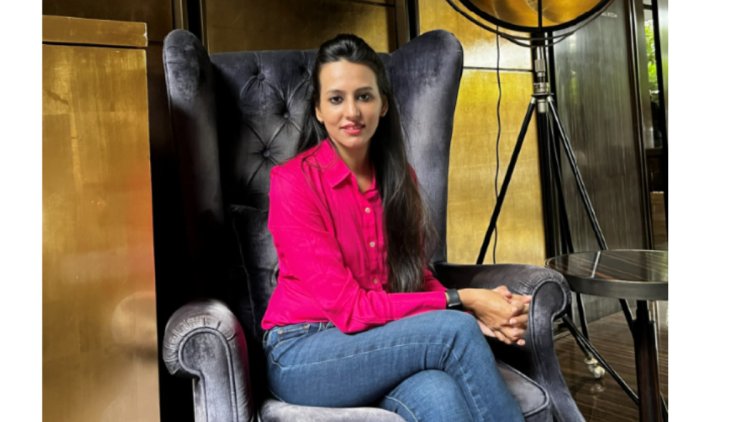
New Delhi [India], November 20: Vidushi Vijayvergiya, Founder and CEO of ISAK Fragrances, grew up surrounded by the art of perfumery. Drawing on her family’s legacy and her exposure to international fragrance markets, she founded ISAK to bring the depth of traditional Indian perfumery to contemporary consumers. In this interview taken by Prachi Saini, she discusses preserving heritage, building a modern fragrance brand, and making Indian perfumery more widely understood.
1. ISAK comes from a family legacy of over 170 years in perfumery. What made you decide to turn this traditional family craft into a contemporary fragrance brand?
As a child, I grew up around perfumery and spent a lot of time with my father in his laboratory. I became familiar with the intricacies of fragrance-making, including the different ingredients and molecules that go into creating a fragrance.
Like many people growing up, I was also drawn to French fragrance houses. I was curious about what they were doing and how they had established themselves as leading names in the industry. This curiosity eventually took me to Switzerland and France. I was studying there, and after my marriage, my husband was also working in Switzerland, which gave me an opportunity to explore the world of perfumery more closely.
I never initially intended to become part of the family business. In fact, I tried to stay away from it for some time. However, the more I explored the subject, the more I realized how much depth there was in the Indian perfumery tradition. What we had been building in India for generations was far more nuanced, with scientific and Ayurvedic knowledge informing the way ingredients were blended and used.
In my family, I had seen blends influenced by the Bruhat Samhita, the Rig Veda, and Ayurvedic knowledge. Ingredients were selected based on seasonality, individual preferences, and what suited a person. I realized that this heritage deserved to be taken forward and introduced to a wider audience. I felt that if I did not take this forward, who would?
The idea behind ISAK was simple: I wanted to talk about Indian perfumery and help people in India and across the world understand its depth and heritage.
Making it contemporary was equally important. I had grown up in a different environment, where people were more accustomed to newer formulations and fresher fragrances. Traditional fragrances such as the typical Bela attar may not appeal to everyone’s preferences today. I knew we had to make these fragrances more wearable while retaining their character. ISAK was therefore created to carry traditional knowledge forward in a contemporary and more accessible way.
2. How do you balance preserving traditional Indian perfumery techniques with the expectations of today’s luxury fragrance consumers?
There are different kinds of consumers in perfumery. There are connoisseurs, first-time buyers, people who know exactly what they want, and those who are still exploring the category. I approach these audiences differently by understanding what each of them is looking for.
For instance, our seasonal launches and limited batches, such as Khus and Hina, are meant for connoisseurs. Someone who is just beginning to explore niche perfumery may not immediately appreciate these fragrances. However, connoisseurs understand why certain fragrances are used during particular seasons and how they are traditionally experienced. We create specific collections for them.
For newer audiences who are still exploring the category, we offer more familiar and contemporary fragrances. These include popular fragrance profiles such as gourmands, along with our rain collection, which has received a lot of love from customers.
At the same time, we continue to offer extremely traditional, untouched, and natural fragrances for connoisseurs who appreciate that side of perfumery. The idea is to maintain a balance and offer something to different kinds of consumers.
What we believe is that today’s first-time buyers may become connoisseurs 10 or 15 years from now. We want to be there to support them as their understanding and appreciation of perfumery evolve.
3. Building a business around an established family craft must come with its own challenges. What were some of the biggest business decisions you had to make while building ISAK as an independent brand?
I think the biggest decision was starting ISAK itself. Initially, there was considerable resistance from my family. As a woman starting something independently in the same industry, it was not an easy decision. Looking back, being able to take that step despite the resistance was my biggest win. I often feel that if I could face that situation, I could face almost anything. I am glad that I have my family’s support today.
Beyond that, one of the early challenges was sourcing materials internationally, particularly packaging. The packaging options available in India were not always at the quality level we wanted, and this remains an important consideration even today.
When you are approaching customers who are already familiar with international luxury brands such as Dior or Louis Vuitton, they have certain expectations. They look at the entire experience, from the bottle and pump to the outer packaging. Even small details matter. We cannot offer a glass bottle with visible imperfections and expect it to meet those expectations.
I wanted to ensure that every point at which a customer interacts with or experiences our product reflects the quality they are accustomed to from international brands. This meant sourcing certain components from outside India, which required additional investment and initially faced resistance. There were questions about why we could not simply use what was available locally.
However, we understood how important these decisions were to maintaining the quality of the overall product experience. That was one of the important decisions we had to make while building ISAK.
4. Shark Tank gave ISAK significant visibility and introduced the brand to a much wider audience. What changed for the business immediately after the episode aired?
Before Shark Tank, one question I heard very often was, “Why would I buy an Indian brand?” After people heard our story and understood what we were trying to build, I hardly heard that question again.
I think the biggest change was in the way people perceived Indian brands. The episode helped us establish a level of trust that had been missing earlier. There was a mindset among some consumers that only an international brand could offer a good-quality product. After Shark Tank, I saw Indian audiences becoming more open to the idea that premium, high-quality products could come from India as well. This shift was not limited to perfumery; it was happening across categories.
At the same time, we faced expectations to make products at much cheaper prices by simply using certain fragrance molecules. I had to take a firm stand that we would not use ingredients or adulterants that were banned outside India. We wanted to stay true to the principles with which we had started ISAK. I am glad that the patience we have shown in following that approach is finally paying off.
5. Beyond the investment and publicity, how did your association with Peyush Bansal influence the way you approached business growth, operations, and brand building?
His support was particularly helpful at that stage because our systems almost broke down after the episode aired. We were sold out, our team was very small, and we did not have the operational processes or inventory in place to manage the sudden demand.
The first 3 or 4 months were extremely challenging. We had to build several things from scratch, from hiring the right people and setting up processes to finding suitable vendors, collecting quotations, and building relationships with them. We also had to manage sourcing, imports, and exports. There was a lot of demand, but we simply did not have enough inventory to fulfill it.
That is where Peyush Bansal and his team were very helpful. He connected me with people from his team and his network who had experience in building and managing businesses. I could reach out to them with my questions, seek guidance, and understand how to approach different operational challenges.
Having access to that experience and support made a real difference during those initial months.
6. How do you ensure that the attention generated by a platform like Shark Tank translates into long-term customer loyalty and sustainable business growth?
We follow several analytical processes, but customer retention is one of the most important aspects for us. We currently see a repeat-purchase rate of around 36–37%, and this is something we work on quite aggressively. Rather than spending all our resources on acquiring new customers, we also focus on retaining the customers who have already experienced our products.
Another challenge after Shark Tank was that we attracted an audience that was not necessarily the right fit for the brand. There were frequent comparisons with brands offering fragrances at much lower prices. People would ask why they should spend ₹2,000 or ₹3,000 when they could get something for ₹200 or ₹300.
We realized that we needed to educate consumers about the differences in ingredients and the kind of perfumery we were building. These are not always comparable products, and it is not an apples-to-apples comparison.
For instance, not every oud fragrance is meant for everyone. Sometimes, fragrances sold as oud are actually closer to amber or vanilla profiles because those scents are more familiar and easier for consumers to enjoy. We wanted people to understand what authentic oud smells like and why it may not appeal to everyone.
This education was important in helping customers understand our approach and what makes our fragrances different. We focused on reaching the right audience rather than trying to appeal to everyone. Alongside that, we continued to work on customer retention and building lasting relationships with our customers.
7. Fragrances are highly personal purchases, and customers usually prefer experiencing a scent before buying it. How did you approach this challenge when building ISAK’s online business?
It was a challenge because we had to think about how customers could understand and experience our fragrances before making a purchase. We also received a lot of support from our existing customers, who would come back to us, share their feedback, and help us understand what could work.
We gradually explored different ways of allowing people to experience our products. We carried out several offline sampling activities, including collaborations with Adani at airports. We also partnered with other brands to send samples to consumers who matched our target audience but may not have known about ISAK or tried our fragrances before.
Alongside sampling, we started working with selected offline stores. We were very particular about choosing stores that attracted the kind of customers we wanted to reach. Eventually, we also opened our own retail outlet.
Our retail space is designed more as an experiential center than just a place to sell products. We use it to talk about our heritage, the art of perfumery, and the processes behind our fragrances. We want customers to understand what goes into making a fragrance, rather than simply purchasing a bottle.
8. ISAK introduced the Discovery Pack to help customers explore different fragrances before committing to a full-sized bottle. How did this idea come about, and what has the customer response been like?
The idea for the Discovery Pack came to me during one of my visits to Beautyworld Middle East in Dubai. I saw brands offering smaller packs and giving them away so that people could experience their fragrances. That made me think about why we could not do something similar with our entire collection.
Instead of offering just one or two fragrances, I wanted customers to have the opportunity to explore our wider collection. Of course, we could not give the products away for free, but we could make them available at a very accessible price so that anyone genuinely interested in the brand could try them.
That is how the Discovery Pack came about. It gave customers an opportunity to experience different fragrances before deciding which full-sized product they wanted to purchase.
9. How important are storytelling, digital content, and customer education in helping consumers understand fragrance notes, ingredients, and the art of Indian perfumery?
I realized the importance of storytelling through our experiences at expos and events. It made me understand that we needed to communicate much more about what we do and how we do it. And when I say “we,” I do not mean just ISAK. I mean the wider Indian perfumery tradition and the knowledge that has existed in India for centuries.
Talking about ingredients, where they are sourced from and the processes involved is extremely important. For ISAK, it has always been important to explain what we are building, why we are building it, how we do it, and what makes our approach distinct.
For example, when we launched our Khus campaign during the summer, we did not simply talk about what Khus smells like. We also explained the science and reasoning behind its use. That story reached a much wider audience than we had expected.
Similarly, as we talk about Hina as a winter fragrance, we want to explain its traditional significance, its mentions in Ayurveda and the Bruhat Samhita, and how it has been used over generations.
The story is not just about the ingredients themselves. It is also about why certain ingredients are used during a particular season, at a particular time, or for a particular person. That context is important.
I believe storytelling plays a significant role in helping Indians understand their own heritage. We often do not know enough about the knowledge and traditions that have existed around us for centuries. Explaining the “why” behind a product is important, and it is one of the most meaningful ways to help consumers appreciate what they are buying.
10. As ISAK continues to expand across digital and offline channels, how do you see the future of fragrance shopping evolving in India? What role will experiential retail and personalized fragrance discovery play?
I strongly believe that fragrance brands need to adopt an omnichannel approach. Fragrances cannot grow through online channels alone. Customers may discover a brand online and make repeat purchases through the same channel, but the trial experience still needs to happen offline.
That is unlikely to change because fragrance is an experiential product. People want to smell and experience a fragrance before deciding whether it suits them. So, any brand looking to grow in this category will eventually need a presence across both online and offline channels.
I can already see more brands recognizing this and expanding their offline presence. It does not necessarily have to mean opening large stores. It could be through smaller kiosks, stores, temporary setups, or sampling activities. The format can differ depending on the brand, but the need to offer customers an opportunity to experience the product will remain.
For fragrances, growth cannot depend on online channels alone. An omnichannel approach will be essential.
Disclaimer: This is a sponsored press release. The publisher does not in any manner whatsoever endorse/subscribe to the contents of this article and/or views expressed herein. Reader discretion is advised.